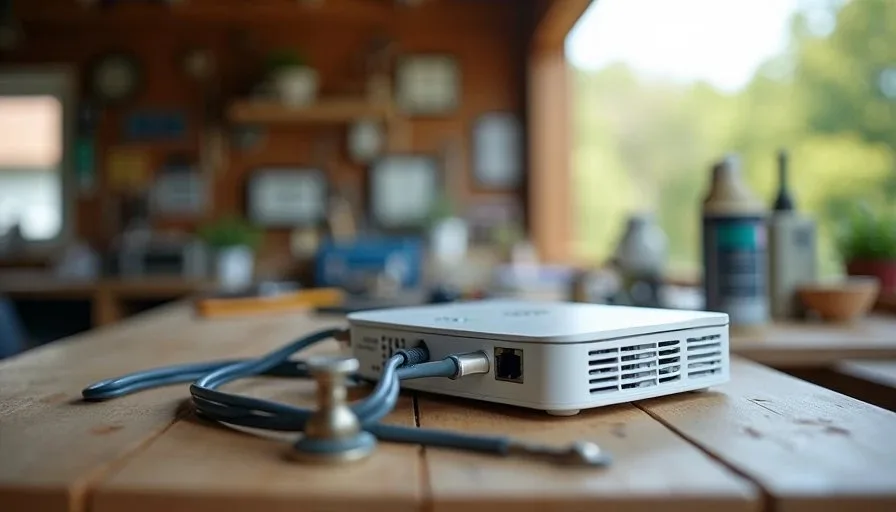
Adding another wireless device is often the path of least resistance. A new mesh node, a Wi-Fi extender, or an extra access point can be plugged in within minutes. No holes in walls, no cable staples, no fishing wire through closets. For many coverage problems that approach is reasonable. In other situations it creates a permanent compromise: more radio interference, more devices to power and update, and performance that still depends on the quality of a wireless link.
Running Ethernet is less convenient at the start and more reliable for years afterward. A wired connection between a primary router and a secondary access point eliminates wireless backhaul entirely. The result is usually higher consistency, lower latency, and one less variable when something goes wrong. The question is not whether Ethernet is superior in the abstract. The question is when the long-term benefits justify the short-term installation effort in a real family home.
This post outlines the situations where a cable is the better investment, the practical ways to run it without turning the house into a construction zone, and the decision framework we use in our own home and when advising other families.
What Wireless Convenience Costs Over Time
Wireless backhaul (the connection between mesh nodes or between a router and a remote access point) works. Modern systems are far better than older extenders. Yet every wireless hop introduces variables:
Signal strength between nodes fluctuates with interference, movement, and household activity.
Available bandwidth for client devices is reduced because some capacity is consumed by the backhaul itself.
Troubleshooting becomes harder because a problem can sit in the client link, the backhaul link, or both.
Each additional wireless node is another device that needs power, firmware updates, and occasional attention.
In a house where the coverage gap is modest and the wireless path between nodes is clean, these costs are often acceptable. In a house where the gap is significant or the wireless path is obstructed, the same costs accumulate into daily friction.
Situations Where Ethernet Is Usually the Better Choice
Several common family-home scenarios favor a wired approach.
1. A single strong secondary location needs reliable coverage
When the main problem is one floor, one wing, or one frequently used outdoor-adjacent room, a single wired access point often solves it more cleanly than a multi-node mesh. The cable guarantees that the remote radio has a full-speed, stable connection back to the primary router.
2. Wireless backhaul paths are obstructed
Thick floors, brick or plaster walls, large mirrors, or long distances between possible node locations degrade wireless backhaul. If a signal survey shows that the best available node-to-node path is already marginal, adding another wireless unit simply multiplies the problem. A cable bypasses the obstruction.
3. The household runs latency-sensitive or high-bandwidth activities in the weak area
Video calls, cloud backups, large file transfers, and competitive gaming benefit from the consistent throughput and lower latency of a wired backhaul. Wireless can be adequate; wired is more predictable.
4. Long-term simplicity is a priority
Every wireless node is a future maintenance item. A wired access point still needs power and occasional updates, but it removes an entire class of wireless variables. Households that already feel stretched by device management often prefer the lower ongoing attention.
5. Future expansion is likely
Once an Ethernet run exists, adding or relocating an access point later becomes trivial. The same cable can also support a wired desktop, a smart-home hub, or a future upgrade without new radio planning.
When Wireless Still Makes More Sense
Ethernet is not always the right answer.
Rentals or historic homes where permanent cable runs are restricted or impractical.
Temporary coverage needs (a short-term home office, a seasonal outdoor space).
Layouts where the only weak areas are small and the wireless path between nodes is already strong.
Households that prioritize zero installation disruption over maximum long-term consistency.
In these cases a well-placed mesh node or a quality wireless access point is the pragmatic choice. The key is making the decision consciously rather than defaulting to wireless because it is easier on installation day.
Practical Ways to Run Ethernet in a Lived-In House
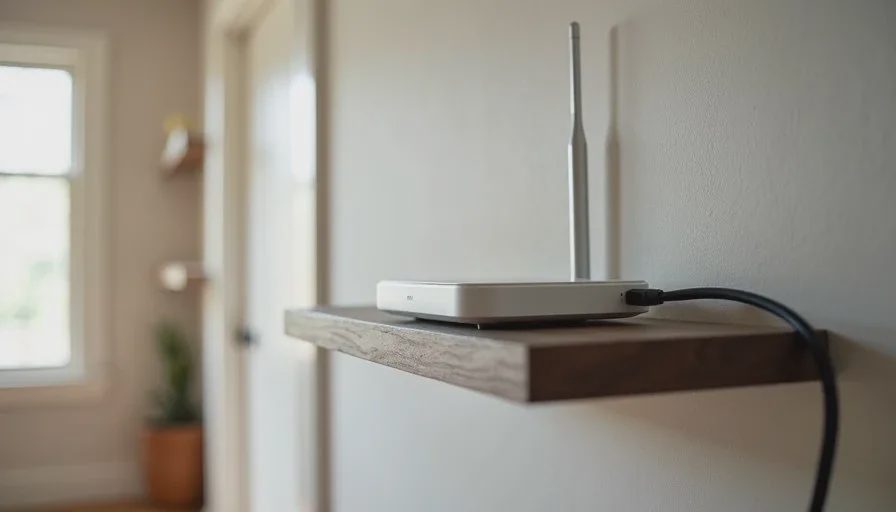
Most family homes do not need professional structured cabling to gain the benefits of a wired access point. Several lower-disruption methods exist.
Use existing paths
Closets stacked above one another, unfinished basements, crawl spaces, and garage attic access often provide routes that require only modest fishing of cable. A single run from a central router location to one upstairs hallway is frequently enough.
Surface raceway and baseboard routes
When walls cannot be opened, paintable surface raceway or careful baseboard routing can carry a cable with minimal visual impact. This is especially workable along rarely noticed paths.
Prioritize one high-value run
You rarely need Ethernet to every room. One carefully chosen run to the center of the weakest zone delivers most of the benefit.
Consider powerline or MoCA as intermediate options
Where a true Ethernet run is extremely difficult, powerline adapters or MoCA (using existing coaxial cable) can provide a wired-like backhaul. They are not identical to dedicated Ethernet, but they are often more stable than a weak wireless hop. Test them in the actual house before committing.
Label everything
Once the cable is in place, label both ends. Future you (or a technician) will be grateful.
How We Decided in Our House
Our upstairs far bedrooms were the clear weak zone. Wireless tests between a potential node location and the main router showed usable but not robust signal. We had a workable path through a closet and the basement. The combination of a localized problem, a feasible cable route, and a preference for long-term simplicity made Ethernet the rational choice.
We ran a single cable, installed one access point, and matched the SSID to the rest of the house. The upstairs has been stable ever since. We avoided adding two or three mesh nodes and the wireless variables that would have come with them.
The installation took a weekend afternoon. The reliability benefit has lasted years.
A Simple Decision Sequence
When you face a coverage gap, walk through these questions in order:
Have placement and basic configuration of the existing equipment already been optimized?
Is the remaining gap localized or widespread?
Is there a realistic, low-disruption path for a cable to the center of the weak area?
Does the household value long-term consistency and lower device count over installation speed?
If a cable is impractical, is the wireless backhaul path strong enough to support an additional node reliably?
If the answers point toward a feasible cable and a localized need, Ethernet is usually the higher-leverage move. If the answers point toward widespread gaps or impossible wiring, a wireless system is the practical tool.
Reliability Compounds
Wireless devices solve problems quickly. Ethernet solves some of the same problems more permanently. In a family home the permanent solution often produces less cumulative friction: fewer dropped calls in the weak zone, fewer devices to keep updated, and fewer mysteries when the network misbehaves.
Running a cable is not glamorous and it is not always possible. When the layout and the problem allow it, it remains one of the highest-value moves available. The short-term effort of fishing a single line frequently buys years of quieter, more predictable network behavior.
Stability First.